Always Giving Up on Journaling? Gentle Ways to Build the Habit
It seems like a lot of people have been there: you start journaling full of excitement, but you might not even make it a week.
Maybe you’ve made the resolution to start over again and again, only to give up each time for one reason or another. That’s okay. If you want to build a journaling habit, this article might help you find the right fix.
First, let’s look at some common reasons people get stuck. Which one sounds like you?

Why Can’t You Stick With Journaling? Common Roadblocks
You don’t know what to write
Life is too busy
You only journal when you’re feeling down
Many people only journal when they’re at a low point. Over time, the journal becomes an emotional dumping ground, and the more you write, the heavier it feels. When your journal is all venting with no reflection or way forward, it turns into an echo chamber for negative feelings.
You’re a “tiny” bit of a perfectionist
Choosing the notebook, the pens, the stickers, even planning the layout: you’re exhausted before you’ve written a single word. When you finally start, the crossed-out words are such an eyesore that you tear out the whole page after just a few lines. The notebook keeps getting thinner, but there’s hardly any real writing in it. The more you look at it, the more it annoys you, until you finally stash it in a drawer and pretend you never started.
Your ritual is so elaborate that you procrastinate
Ideally, it’s a quiet evening. You brew a nice cup of tea, change into cozy pajamas, sit at a clean, tidy desk, and write about your day with your favorite pen …… The more conditions you set, the fewer chances you actually get to write. We keep waiting for the “perfect” moment, but how often does life give us those? So you put it off again and again, until even opening your journal feels exhausting.
Writing doesn’t make you feel anything, so it seems pointless
You care too much about your writing and can’t let yourself be casual
You’re afraid someone will read it, so you can’t be completely honest
Solutions for Each Roadblock to Make Journaling a Habit
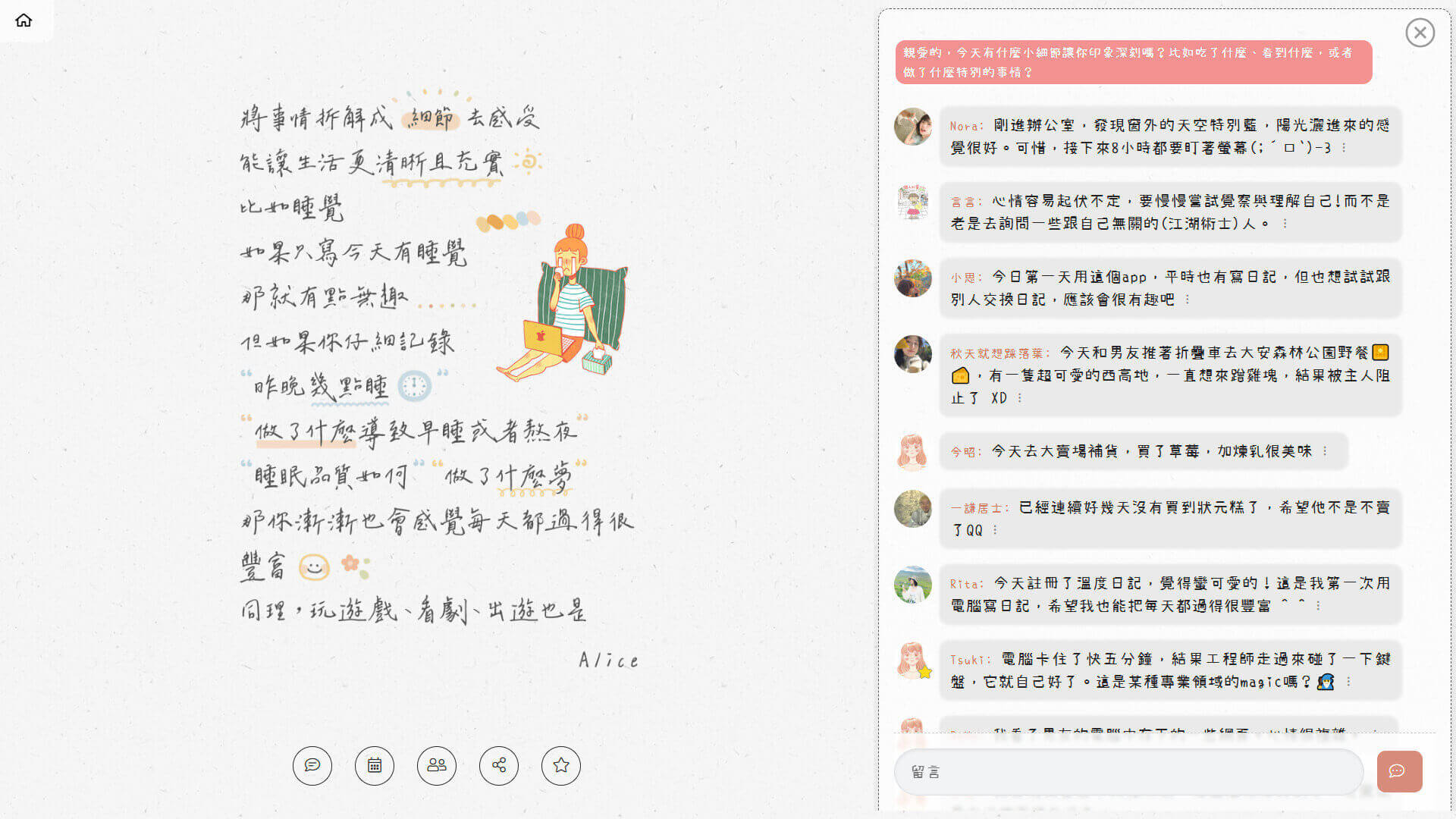
Don’t know what to write? Start with the details, and life will come into focus
Take sleep, for example. Instead of just writing “I slept today,” write down “What time did I go to bed last night? How well did I sleep? What made me go to bed early or stay up late? What did I dream about?” Details like these make your entries more meaningful and help you understand your routines and habits.
The same goes for gaming, watching shows, eating, or going on trips. You can write down more of the parts worth savoring, like “Where is the story at now? Which lines really struck me? What special dish did I have today? What new experiences did this trip bring?”
Through these small but real records, you’ll gradually realize that every day is actually full and rich. Or you’ll notice that you don’t want to live on autopilot, and decide to make a change.
Further reading: How to Journal: 9 Journaling Ideas to Get You Unstuck!
Further reading: What to Write in a Journal: 8 Practical and Fun Ideas
Too busy? Find a comfortable rhythm and try putting yourself first
As soon as things get hectic, you think: eh, it’s fine if I write tomorrow. Work is more important, I need to reply to my friends, the laundry needs doing …… Your journal always gets pushed to the bottom of the list.
Life is full of “things I have to do,” which leaves little time for “things I want to do.” When we keep putting journaling last, it’s a bit like putting ourselves last. After all, your journal is for you. It’s not an assignment, and it’s not for pleasing anyone.
You don’t need to write every day. Find a rhythm that feels comfortable, maybe just two or three times a week. What matters most is remembering to put yourself first when you need it.
Only journal when you’re feeling down? Good days are even more worth writing about
When you’re feeling down, journaling helps you let your emotions out. But when you’re feeling good, it’s even more worth writing down. That way, when you look back, you’ll see the full picture of your life.
If you only keep the painful moments, over time you might start to feel like “all I ever do is feel sorry for myself,” which only deepens your self-criticism. But the truth is, your days have plenty of little joys too. They just never got written down.
Make sure to keep proof of your happiness! When future you comes back to read it, you’ll feel that happiness all over again.
A “tiny” bit of a perfectionist? Try a digital journal
If you spend too much time picking out planners, pens, stickers, and washi tape and planning layouts before you even start, it can actually make it really hard to begin.
That’s when a digital journal is worth a try! It’s flexible and convenient. You don’t have to worry about crossed-out words or torn pages, and there’s no layout to stress over. If you’re looking for a journaling app with lots of beautiful fonts and stickers, we recommend Hearty Journal .

Your ritual is so elaborate that you procrastinate? Use spare moments to jot down ideas first
Our days are full of little pockets of time, like standing in line, waiting for food, waiting for the bus, commuting …… You can use these brief moments to open your journaling app and jot down an idea, a feeling, or something small from your day. Even a sentence or two is fine. That way, when you sit down to write properly, you won’t be stuck staring at a blank page.
Making use of spare moments makes journaling feel natural and easy, cuts down on procrastination, and helps you keep it going.
Been journaling for a while and it feels pointless? Get clear on your motivation
Take a moment to think: why do you want to journal? Some people want to understand themselves better, some want their lives to feel more organized, and some simply want to hold on to memories, the things time can’t take away.
There’s definitely a reason the idea of journaling came to you. Maybe you wanted to make a change, or something else. Once you understand why you journal, nothing you write will ever be meaningless.
You can also make that reason your first entry, as motivation to keep going.
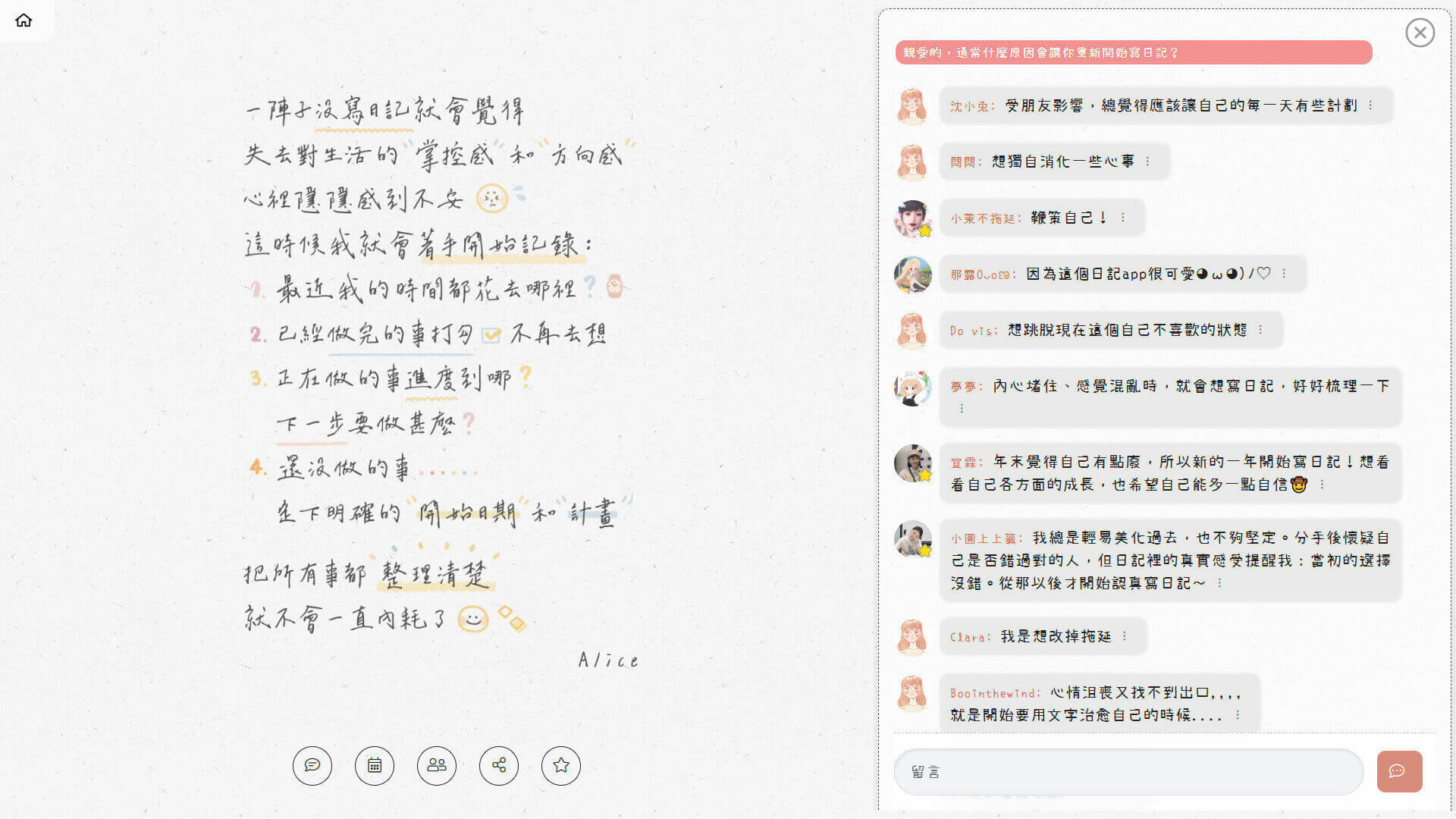
Worried too much about your writing? You’re having a conversation, not writing an essay
Imagine your journal is a person, or that you’re just talking to yourself, rather than writing a formal essay. Your journal can be written however you like. It doesn’t have to be picture-perfect, you don’t need to keep up an image, and it’s fine to say things only you would understand.
Worried someone will peek? Try a digital journal you can lock
Many journaling apps offer a passcode lock. That way, you can write down your true thoughts and feelings with peace of mind, without worrying about your privacy, and simply enjoy journaling.
Every Word You Write Is an Act of Kindness
When it comes to journaling, there’s always a bit of a tug-of-war between ideals and reality. Maybe you’ve tried to start but kept stopping and starting. Maybe you think you just can’t stick with things. But habits don’t happen overnight. Give yourself a little time, and it’s not as far away as it seems.
Every entry you write, no matter how long or short, no matter how you were feeling, is a bit of proof that you were there for yourself. The moments you were willing to pause and record will quietly become a gentle reminder to yourself later on.
Why call it an act of kindness? Because you were willing to let those feelings be seen instead of pretending everything was fine. You didn’t blame yourself for feeling that way, and you didn’t force yourself to sort it all out right away. You simply, honestly, allowed yourself to “feel this way.”
So even if all you write is “I’m so annoyed I’m so annoyed I’m so annoyed!”, that’s exactly what you needed in that moment. And someday, those seemingly messy words might become the beginning of understanding yourself and embracing who you are.
Give yourself a little time, and give journaling a little space. Because every stroke you write in honesty with yourself is, in itself, a gentle practice.