Feeling Down? 3 Simple Journaling Psychology Techniques That Really Help
What can you do when you’re in a bad mood? Most people would say exercise, listen to music, eat something good, take a trip, or talk to a friend, and those are all great options. But sometimes your circumstances or schedule won’t allow it, or you try them and your mind is still a mess.
When that happens, why not try journaling? Write out your restlessness, hurt, or unease and sort through it slowly. You’ll find your mood starting to soften and clear, with a little more sense of calm.
Here are three simple, effective “journaling psychology techniques” to help you sort out your feelings.
- 👉 Try Hearty Journal - A Hand-Drawn Private Diary
- 📝 Further reading: Feeling Anxious? 7 Journaling Prompts to Help You Find Your Calm Again

Technique 1: Expressive Writing
Sometimes the worries, resentment, and stress in your head become a tangled ball of yarn, replaying the same things over and over without stopping. Expressive writing means pouring everything in your mind onto the page. Write whatever comes to you, and don’t worry for now about whether it’s messy or right.
Journal Example
.There’s no example. Just write down what’s on your mind. Typos, rambling, and jumping from thought to thought are all fine. You can wallow, blame the whole world, or even swear. That’s okay.
Gentle Reminders
.Seeing your vulnerable, not-so-great side might make you feel disgusted or ashamed. Comfort yourself: “This is just how I feel right now. Writing it down doesn’t mean I’m a bad person, and it doesn’t mean I’ll always be this way.” Emotions flow and change. We don’t need to deny them, and we certainly don’t need to reject ourselves because of them.
.After you finish, write a few comforting words to yourself, and you’ll feel a bit better. You can also describe yourself in the “third person,” like: “They completely fell apart today. They were already under a lot of pressure, they weren’t feeling well, and then all kinds of things went wrong.” People tend to be harder on themselves. When the same thing happens to someone else, we might feel sympathy, but when it happens to us, we just think we’re not good enough. Remember: love yourself the way you love others.
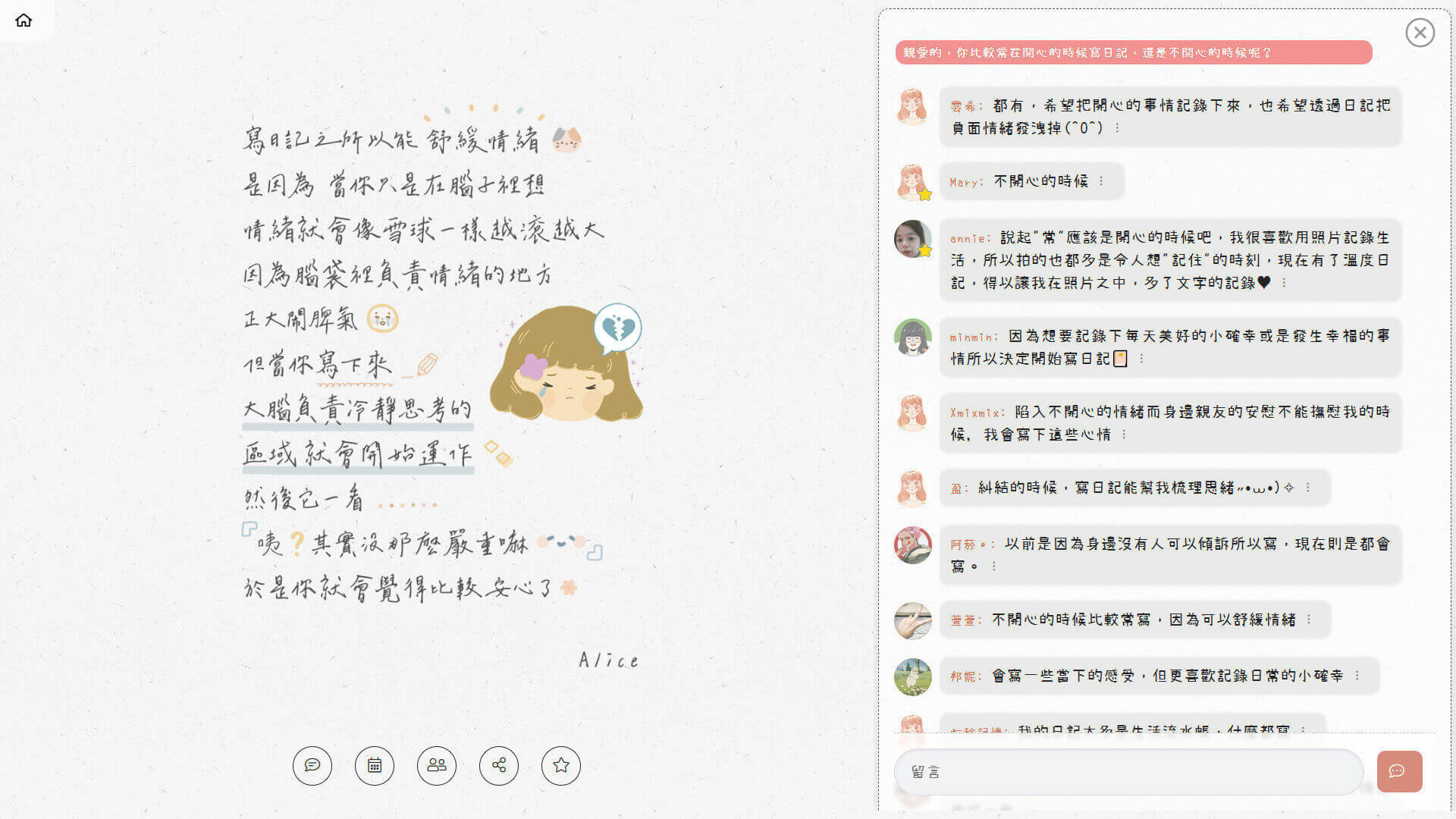
Technique 2: Affect Labeling
Research shows that when you name your emotions and put your feelings into words, activity in the brain’s amygdala decreases and your emotions ease. In other words, just writing “I feel really agitated right now” can help you calm down a little.
Journal Examples
.Right now I feel ___ (agitated / uneasy / discouraged), because ___ (I have too much work / my friend doesn’t understand me / a setback I ran into today).
.Today I’m a bit ___ (mentally drained / lonely / tired), and I hope I can ___ (calm down / give myself some space / get some real rest).
Gentle Reminders
.Try to describe your emotions with nuanced words. It helps more than simply writing “I’m in a bad mood.”
.You can add emoji, kaomoji, or stickers to express yourself more fully, and it’ll look more comforting, too.
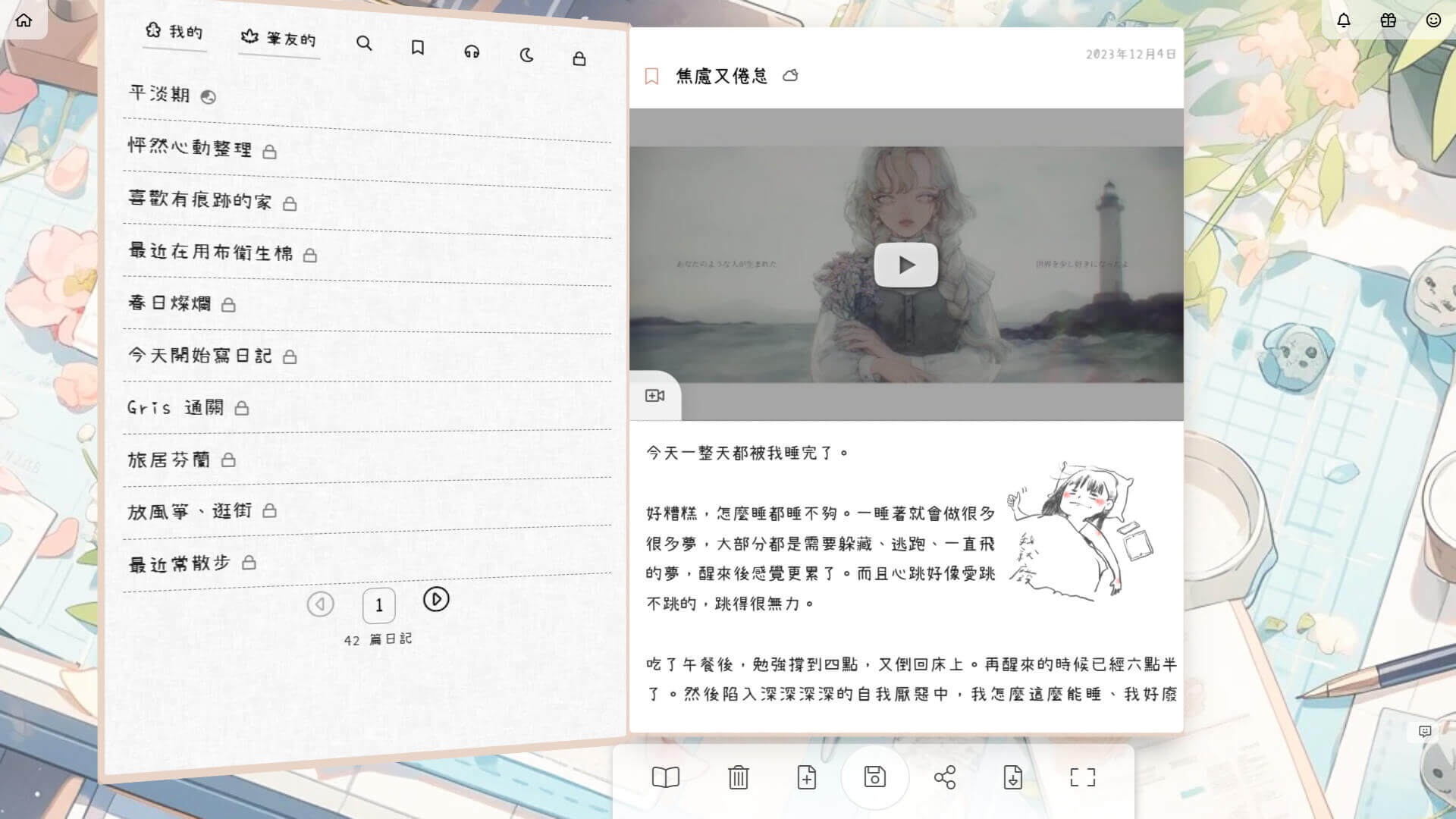
Technique 3: Narrative Reframing
Look at the same event from a different angle. What matters is how we interpret it.
Journal Examples
.Today ___ (event) happened, and it made me feel ___ (negative emotion), but I gained ___ (growth / insight / reflection).
.I had an argument with a friend today. Fighting felt awful, but it also helped me see more clearly what I care about, what I can tolerate, and what I can’t forgive.
Gentle Reminders
.You can ask yourself: when I look back on this entry in the future, what new understanding might I gain from it?
.“Narrative reframing” isn’t about forcing a bad thing into a good one. If there truly isn’t any insight, that’s perfectly okay. Simply writing down what’s on your mind reduces rumination and makes things feel less tangled. When you look back after a while, your state of mind may be different, and you might come to a new conclusion about what happened.
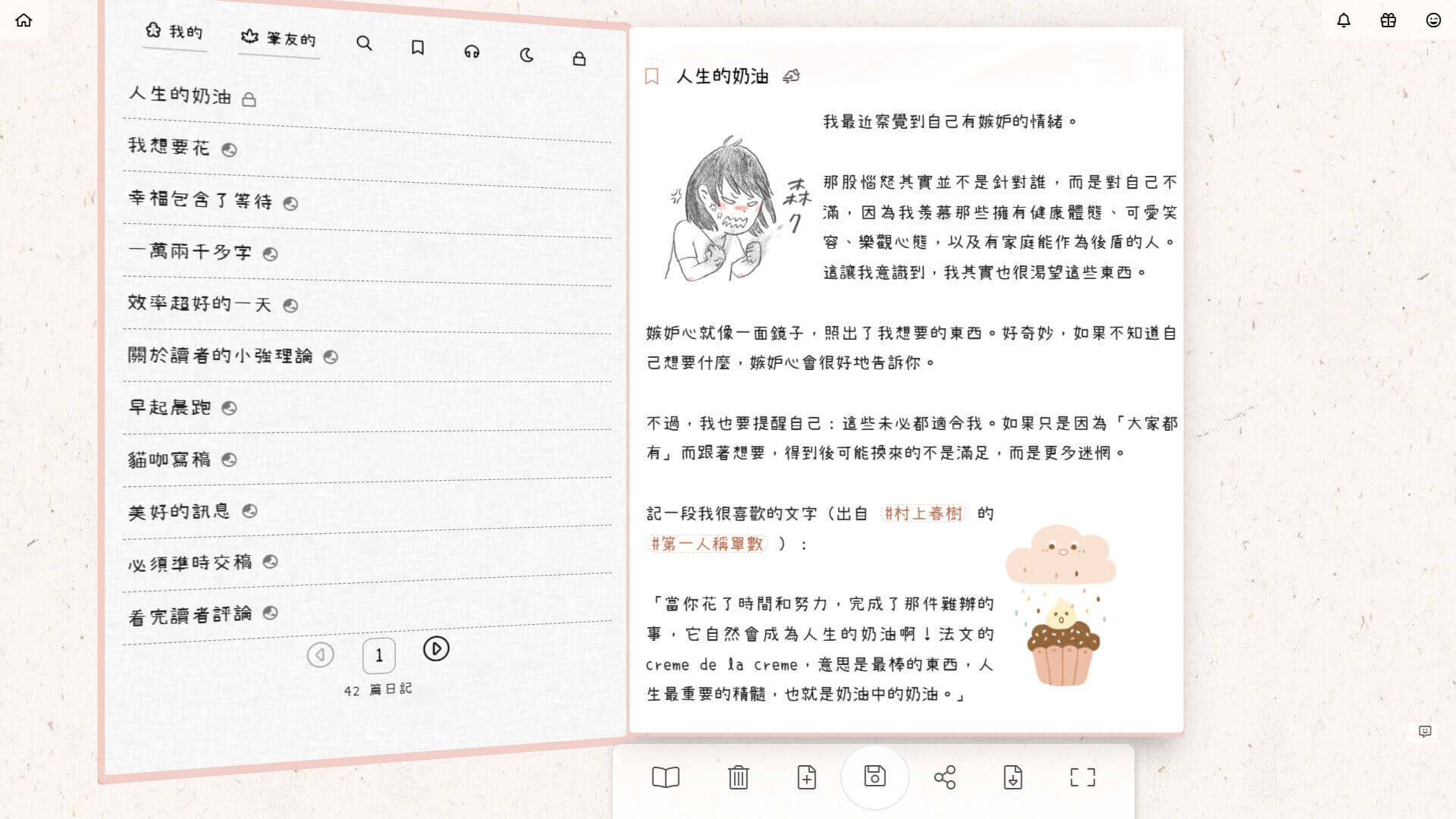
You can use these three techniques on their own or together. When you’re in a bad mood:
First, use expressive writing to empty your head,
then label your emotions to sort them out,
and finally, use narrative reframing to write the story down, so that once you’ve calmed down a bit, or someday in the future, you have a chance to see it in a new light.
A journal isn’t for recording a perfect life. It’s there to keep you company as you think and feel. You can write in your joys and sorrows, your doubts, unease, loneliness, hopes, and the things that move you ……
Your unique experiences, feelings, and thoughts make you who you are, which also means there will always be times when you’re not understood or accepted. But that’s okay. You can be your own best friend!
How do you cope with a bad mood? Give these three techniques a try!
These articles can help too:
- 📝 Further reading: From Highly Sensitive to Highly Self-Aware: Journal to Know Yourself, Soothe Your Emotions, and Recharge
- 📝 Further reading: Can’t Stop Feeling Anxious? 11 Psychology-Based Remedies for Relief
- 📝 Further reading: Read This When You’re Anxious: Gentle Yet Powerful Affirmations